Menu

Tech Tubes & Fittings

As a manufacturer of instrumentation tube fittings in India, we offer an extensive selection of valves, tubes, and fittings. Explore our product catalog today to find the perfect solution for your needs.

Blog posts

SMO 254 Instrumentation Valves Manufacturer in India | High Pressure Instrumentation Valves for Offshore, Marine & Chemical Industries

SMO 254 Instrumentation Valves Manufacturer in India – Engineered for Critical Process Reliability

Modern process industries operate in environments where equipment is constantly exposed to high pressure, aggressive chemicals, chloride-rich seawater, elevated temperatures, and demanding operating conditions. In such applications, instrumentation valves are not merely components—they are critical safety devices responsible for controlling process media, isolating instruments, maintaining measurement accuracy, and protecting valuable assets.

Choosing the right valve material can significantly reduce maintenance costs, increase plant uptime, and improve operational safety.

Tech Tubes & Fittings is a trusted SMO 254 Instrumentation Valves Manufacturer in India, manufacturing a complete range of UNS S31254 high-pressure instrumentation valves for offshore oil & gas, petrochemical, marine, LNG, hydrogen, desalination, pharmaceutical, and power generation industries.
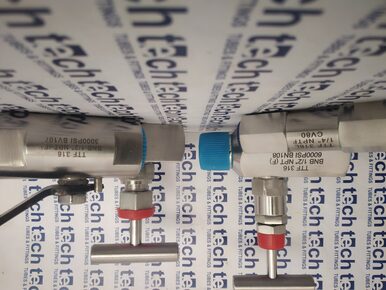
Our precision-engineered valves combine superior metallurgy, advanced CNC machining, and rigorous quality control to deliver dependable performance in the world's most demanding industrial environments.


Why Instrumentation Valves Matter

Instrumentation valves are designed to precisely regulate, isolate, vent, equalize, and control pressure or fluid flow within instrumentation systems.

Unlike conventional industrial valves, instrumentation valves require:

  • Extremely low leakage rates
  • High dimensional accuracy
  • Smooth stem operation
  • Excellent pressure retention
  • Long service life
  • Reliable sealing performance
  • Easy maintenance

Failures in instrumentation valves can result in inaccurate measurements, process interruptions, equipment damage, environmental incidents, or safety hazards.


Why Choose SMO 254?

Many industrial facilities still rely on SS316 instrumentation valves. While SS316 performs well in moderate environments, it often struggles in chloride-rich and highly corrosive applications.

SMO 254 (UNS S31254) is a premium super-austenitic stainless steel developed specifically for these severe-service conditions.

Its high levels of chromium, nickel, molybdenum, and nitrogen provide exceptional resistance to:

  • Pitting corrosion
  • Crevice corrosion
  • Chloride stress corrosion cracking
  • Seawater attack
  • Acidic media
  • High-salinity environments

This advanced alloy significantly extends equipment life and reduces maintenance requirements.


Complete Range of SMO 254 Instrumentation Valves

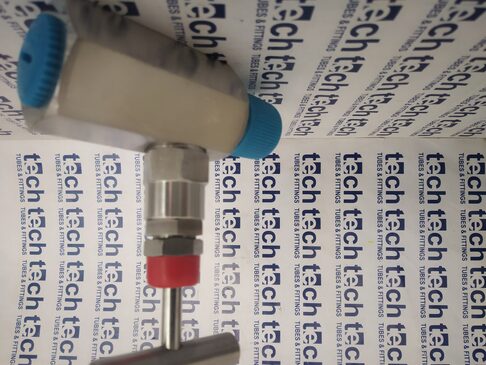
SMO 254 Needle Valves

Designed for precise flow regulation and isolation in high-pressure instrumentation systems.

Applications include:

  • Pressure gauges
  • Sampling systems
  • Hydraulic systems
  • Instrument panels
  • Process analyzers

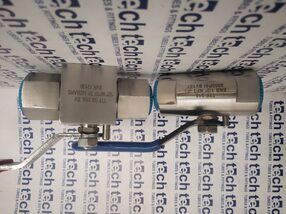
SMO 254 Ball Valves

Quarter-turn valves providing quick shutoff with low operating torque.

Suitable for:

  • Instrument isolation
  • Process pipelines
  • Gas systems
  • Chemical transfer
  • High-pressure fluid systems

SMO 254 Check Valves

Prevent reverse flow while protecting pumps, compressors, and instrumentation equipment.

Available in:

  • Spring Loaded Check Valves
  • Inline Check Valves
  • Piston Check Valves
  • Ball Check Valves

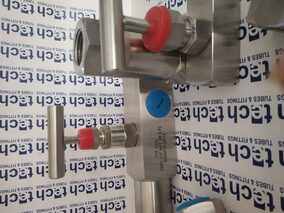
SMO 254 Manifold Valves

Designed for differential pressure transmitters and pressure instrumentation.

Available as:

  • 2 Valve Manifold
  • 3 Valve Manifold
  • 5 Valve Manifold

SMO 254 Air Headers

Provide safe and reliable distribution of compressed instrument air to multiple pneumatic devices.

Available with customized outlet configurations and mounting options.


Precision Manufacturing

Every valve manufactured by Tech Tubes & Fittings undergoes advanced CNC machining to achieve:

  • Perfect dimensional accuracy
  • Smooth stem operation
  • Precision threads
  • Bubble-tight sealing
  • Low operating torque
  • Long service life

Each component is inspected throughout production to maintain consistent quality.


Features of Our SMO 254 Instrumentation Valves

  • Leak-free design
  • High pressure capability
  • Excellent corrosion resistance
  • Long operational life
  • Compact construction
  • Precision machining
  • Low maintenance
  • Easy installation
  • International thread compatibility
  • Excellent vibration resistance

Industries We Serve

Our SMO 254 instrumentation valves are widely supplied to:

Offshore Oil & Gas

Subsea control systems, offshore platforms, FPSOs, and production manifolds.

Petrochemical Plants

Corrosive process media, instrumentation skids, and process isolation systems.

Marine Industry

Ballast systems, seawater handling, engine room instrumentation, and shipbuilding.

Desalination Plants

Reverse osmosis skids, high-pressure pumps, seawater filtration, and brine systems.

Hydrogen Projects

Compression systems, storage facilities, and clean energy infrastructure.

LNG Facilities

Cryogenic process instrumentation and gas handling systems.

Power Generation

Steam systems, turbine controls, pressure monitoring, and instrumentation panels.

Pharmaceutical Industry

High-purity instrumentation and contamination-free process control.


International Quality Standards

Every valve can be supplied with:

  • EN 10204 3.1 Material Test Certificate
  • Positive Material Identification (PMI)
  • Hydrostatic Pressure Testing
  • Pneumatic Seat Leak Testing
  • Heat Number Traceability
  • Third-Party Inspection (TÜV, DNV, BV, Lloyd's Register)
  • Dimensional Inspection Reports

These certifications provide complete confidence for EPC contractors, consultants, and plant operators.


Why Global Buyers Trust Tech Tubes & Fittings

Tech Tubes & Fittings has earned a reputation as a dependable manufacturer of premium instrumentation products by combining advanced engineering, quality manufacturing, and responsive customer support.

We offer:

  • Customized engineering solutions
  • International quality standards
  • Precision CNC manufacturing
  • Competitive export pricing
  • Technical assistance
  • Fast global delivery
  • Reliable after-sales support

Why Choose Tech Tubes & Fittings?

✔ Leading SMO 254 Instrumentation Valves Manufacturer in India

✔ Premium UNS S31254 (6Mo) Material

✔ Complete Range of Instrumentation Valves

✔ High Pressure Designs

✔ Leak-Free Performance

✔ Corrosion Resistant Construction

✔ EN 10204 3.1 Certification

✔ PMI Available

✔ Third-Party Inspection

✔ Worldwide Export Supply

✔ Engineering Support


Frequently Asked Questions

What is SMO 254?

SMO 254 (UNS S31254) is a high-alloy super-austenitic stainless steel developed for applications requiring exceptional resistance to chloride-induced corrosion and aggressive industrial environments.


Which valves are available in SMO 254?

Tech Tubes & Fittings manufactures:

  • Needle Valves
  • Ball Valves
  • Check Valves
  • Manifold Valves
  • Air Headers
  • Instrumentation Components

Which industries use SMO 254 instrumentation valves?

They are widely used in offshore oil & gas, marine, petrochemical, desalination, LNG, hydrogen, power generation, pharmaceutical, and chemical processing industries.


Why choose SMO 254 instead of SS316?

SMO 254 provides significantly better resistance to pitting, crevice corrosion, and chloride stress corrosion cracking, making it ideal for harsh environments where SS316 may not provide sufficient service life.
 

Go Back

SMO 254 Manifold Valve Manufacturer in India | 2 Valve, 3 Valve & 5 Valve Instrumentation Manifolds

SMO 254 Manifold Valve Manufacturer in India – High Integrity Isolation & Instrumentation Solutions for Critical Process Industries

Modern process industries depend on accurate pressure measurement and dependable isolation of field instruments. Whether installed on offshore platforms, hydrogen plants, refineries, petrochemical complexes, desalination facilities, or chemical processing units, manifold valves play a critical role in protecting transmitters, simplifying maintenance, and ensuring safe plant operation.

Tech Tubes & Fittings is a trusted SMO 254 Manifold Valve Manufacturer in India, producing precision-engineered 2 Valve, 3 Valve, and 5 Valve Instrumentation Manifold Valves manufactured from UNS S31254 (SMO 254 / 6Mo Stainless Steel). Designed for highly corrosive and high-pressure environments, our manifold valves provide long-term reliability, excellent corrosion resistance, and leak-free performance in the world's most demanding industrial applications.


What is a Manifold Valve?

A manifold valve is an instrumentation valve assembly used to connect pressure transmitters, gauges, and differential pressure instruments to the process line. It combines multiple valve functions into a single compact body, reducing piping complexity, minimizing leak points, and simplifying maintenance.

Typical manifold configurations include:

  • 2 Valve Manifold – Isolation and venting for pressure gauges.
  • 3 Valve Manifold – Isolation, equalization, and venting for differential pressure transmitters.
  • 5 Valve Manifold – Isolation, equalization, calibration, and venting for advanced instrumentation systems.

These manifolds are widely used in critical process applications where safety, precision, and uptime are essential.


Why Choose SMO 254 for Manifold Valves?

Conventional SS316 manifold valves perform well in standard industrial environments but may suffer from pitting, crevice corrosion, and chloride stress corrosion cracking in aggressive service conditions.

SMO 254 (UNS S31254) is a premium 6Mo stainless steel containing elevated levels of chromium, nickel, molybdenum, and nitrogen, giving it outstanding resistance to:

  • Chloride-rich seawater
  • Brine solutions
  • Acidic chemicals
  • High-humidity marine environments
  • Corrosive process fluids

This makes SMO 254 an ideal material for instrumentation systems where failure is not an option.


Key Features

  • Leak-free soft or metal seat design
  • Precision CNC-machined body
  • Bubble-tight shutoff
  • Low operating torque
  • Compact design
  • Excellent vibration resistance
  • High pressure capability
  • Corrosion-resistant construction
  • Long service life
  • Easy maintenance

Available Manifold Configurations

Tech Tubes & Fittings manufactures:

  • 2 Valve Manifold
  • 3 Valve Manifold
  • 5 Valve Manifold
  • Block & Bleed Manifold
  • Remote Mount Manifold
  • Direct Mount Manifold
  • Flanged Manifold Assemblies
  • Customized Instrumentation Manifolds

Available with:

  • NPT Threads
  • BSPT Threads
  • BSPP Threads
  • Socket Weld Ends
  • Butt Weld Ends
  • Custom End Connections

Applications

Our SMO 254 Manifold Valves are widely used in:

Offshore Oil & Gas

Pressure transmitters, wellhead control panels, subsea topside instrumentation, FPSOs, and offshore production facilities.

Petrochemical & Refineries

High-pressure process instrumentation, analyzer systems, and control loops handling corrosive hydrocarbons.

Desalination Plants

Differential pressure monitoring across reverse osmosis membranes and seawater filtration systems.

Chemical Processing

Isolation of pressure transmitters in reactors, dosing systems, and aggressive chemical pipelines.

LNG & Cryogenic Plants

Reliable isolation and calibration of pressure instrumentation under demanding operating conditions.

Hydrogen & Renewable Energy

Instrumentation for hydrogen compression, storage, and distribution systems requiring dependable leak-free sealing.


Manufacturing Excellence

Every manifold valve produced by Tech Tubes & Fittings is manufactured using advanced CNC machining to achieve:

  • Accurate internal passages
  • Precise thread dimensions
  • Reliable stem alignment
  • Smooth valve operation
  • Consistent sealing performance

Each valve is inspected and pressure tested before dispatch.


Quality Assurance

Every SMO 254 Instrumentation Manifold Valve can be supplied with:

  • EN 10204 3.1 Material Test Certificate
  • Positive Material Identification (PMI)
  • Hydrostatic Pressure Test
  • Pneumatic Seat Leak Test
  • Heat Number Traceability
  • Third-Party Inspection (TÜV, DNV, BV, Lloyd's Register)
  • Dimensional Inspection Report

These documents provide full confidence for EPC contractors, consultants, and end users.


Why Choose Tech Tubes & Fittings?

As a leading SMO 254 Manifold Valve Manufacturer in India, Tech Tubes & Fittings delivers high-quality instrumentation solutions for critical industries around the world.

Our product portfolio includes:

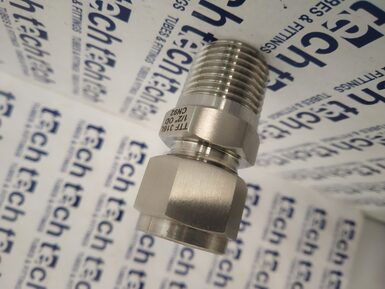
  • SMO 254 Tube Fittings
  • SMO 254 Needle Valves
  • SMO 254 Instrumentation Ball Valves
  • SMO 254 Check Valves
  • SMO 254 Air Headers
  • SMO 254 Rapid Screw Fittings
  • Forged Pipe Fittings
  • Double Ferrule Tube Fittings
  • High Pressure Instrumentation Valves

Industries We Serve

  • Oil & Gas
  • Offshore Platforms
  • Petrochemical
  • Chemical Processing
  • LNG
  • Marine
  • Desalination
  • Hydrogen
  • Power Generation
  • Fertilizer
  • Pharmaceutical
  • Water Treatment
  • EPC & LSTK Projects

Frequently Asked Questions

Why use a 5 Valve Manifold?

A 5 Valve Manifold allows isolation, equalization, venting, and calibration of differential pressure transmitters without removing the instrument from service, improving safety and reducing downtime.

Why is SMO 254 better than SS316?

SMO 254 offers significantly higher resistance to chloride-induced corrosion, making it ideal for seawater, offshore, and chemical processing applications where SS316 may experience premature failure.

Can manifold valves be customized?

Yes. Tech Tubes & Fittings manufactures custom manifold valves with different port sizes, thread standards, mounting styles, and pressure ratings to meet project-specific requirements.

Go Back

SMO 254 Rapid Screw Fittings Manufacturer in India | UNS S31254 Push-On & Compression Fittings for Corrosive Applications

SMO 254 Rapid Screw Fittings Manufacturer in India – Precision Engineered for the Most Demanding Industrial Applications

Industrial automation and process instrumentation demand connectors that are not only quick to install but also capable of withstanding highly corrosive environments without compromising reliability. Whether it is an offshore platform exposed to salt-laden air, a desalination plant processing seawater, or a chemical facility handling aggressive process media, the quality of every connection directly impacts plant safety and operational efficiency.

Tech Tubes & Fittings is a leading SMO 254 Rapid Screw Fittings Manufacturer in India, offering precision-engineered UNS S31254 Rapid Screw Fittings designed for leak-free performance, excellent corrosion resistance, and long service life. Manufactured using premium 6Mo stainless steel, our fittings are trusted for critical applications where conventional stainless steel grades are unable to deliver the required durability.


What are SMO 254 Rapid Screw Fittings?

Rapid Screw Fittings are specially designed tube connectors that enable quick and secure installation of pneumatic and instrumentation tubing. They reduce assembly time while ensuring a strong mechanical grip and leak-free sealing.

Unlike ordinary connectors, SMO 254 Rapid Screw Fittings are manufactured from UNS S31254 (6Mo Stainless Steel), a super austenitic stainless steel developed specifically for highly corrosive environments.

The alloy contains elevated levels of:

  • Chromium
  • Nickel
  • Molybdenum
  • Nitrogen

This unique chemical composition provides exceptional resistance against:

  • Pitting corrosion
  • Crevice corrosion
  • Chloride attack
  • Seawater corrosion
  • Stress corrosion cracking
  • Acidic process fluids

The result is a fitting capable of maintaining long-term performance even under continuous exposure to harsh industrial conditions.


Why Choose SMO 254 Instead of Conventional Stainless Steel?

Many industries still rely on SS304 or SS316 fittings. While these materials perform well in general applications, they often struggle in environments containing chlorides, seawater, acidic chemicals, or elevated temperatures.

SMO 254 offers significant advantages:

✔ Superior resistance to chloride-induced corrosion

✔ Higher pitting resistance equivalent number (PREN)

✔ Outstanding resistance to seawater

✔ Excellent mechanical strength

✔ Longer operational life

✔ Reduced maintenance costs

✔ Greater process reliability

For industries where downtime can result in substantial production losses, upgrading to SMO 254 becomes a strategic investment rather than an additional cost.


Features of SMO 254 Rapid Screw Fittings

Every fitting manufactured by Tech Tubes & Fittings is engineered with precision and subjected to strict quality controls.

Our fittings feature:

  • Leak-free construction
  • Precision CNC machining
  • Excellent dimensional accuracy
  • High pressure capability
  • Superior vibration resistance
  • Smooth internal flow path
  • Reduced pressure drop
  • Easy installation
  • Long service life
  • Minimal maintenance

Each component is carefully manufactured to ensure reliable sealing performance under demanding operating conditions.


Available Configurations

We manufacture a comprehensive range of SMO 254 Rapid Screw Fittings including:

  • Male Connectors
  • Female Connectors
  • Male Elbows
  • Female Elbows
  • Union Connectors
  • Bulkhead Connectors
  • Straight Connectors
  • Reducers
  • Tees
  • Crosses
  • Adapters
  • Tube End Connectors
  • Custom Designs

Custom configurations can also be manufactured according to customer drawings or project specifications.


Thread Standards Available

Tech Tubes & Fittings manufactures fittings compatible with international thread standards including:

  • NPT
  • BSPT
  • BSPP
  • ISO Threads
  • Metric Threads
  • UNF Threads

This allows seamless integration into existing instrumentation and pneumatic systems worldwide.


Applications

Our SMO 254 Rapid Screw Fittings are widely used across industries requiring corrosion-resistant and dependable tube connections.

Typical applications include:

Offshore Oil & Gas

Instrumentation panels, hydraulic control systems, wellhead controls, subsea modules, and offshore production platforms.

Chemical Processing

Chemical dosing systems, acid transfer lines, reactor instrumentation, and process control systems handling corrosive chemicals.

Desalination Plants

High-pressure seawater systems, reverse osmosis skids, brine handling systems, and water treatment plants.

Marine Industry

Shipbuilding, ballast systems, engine rooms, deck instrumentation, and offshore support vessels.

LNG & Cryogenic Plants

Instrumentation tubing, pneumatic controls, and process monitoring systems.

Pharmaceutical Industry

Clean process instrumentation, sterile production equipment, and high-purity fluid systems.

Power Plants

Steam instrumentation, turbine controls, boiler monitoring systems, and process automation.

Hydrogen Projects

Hydrogen compression systems, storage infrastructure, and process instrumentation requiring reliable leak-free connections.


Why Precision Manufacturing Matters

Even premium alloys cannot compensate for poor machining.

Every Rapid Screw Fitting manufactured by Tech Tubes & Fittings undergoes:

  • CNC precision machining
  • Dimensional inspection
  • Thread accuracy verification
  • Surface finish inspection
  • Pressure testing
  • Leak testing

This ensures every fitting performs consistently under real operating conditions.


Quality Assurance

As a trusted SMO 254 Rapid Screw Fittings Manufacturer in India, quality is integrated into every stage of production.

We can supply:

  • EN 10204 3.1 Material Test Certificate
  • Positive Material Identification (PMI)
  • Hydrostatic Pressure Test Report
  • Pneumatic Leak Test
  • Heat Number Traceability
  • Third Party Inspection (TÜV, DNV, BV, Lloyd's Register)
  • Dimensional Inspection Report

These certifications provide confidence to EPC contractors, consultants, OEMs, and end users worldwide.


Why Global Buyers Choose Tech Tubes & Fittings

Tech Tubes & Fittings is recognized for manufacturing premium instrumentation products for some of the world's most demanding industries.

Our product portfolio includes:

  • SMO 254 Tube Fittings
  • SMO 254 Needle Valves
  • SMO 254 Instrumentation Ball Valves
  • SMO 254 Check Valves
  • SMO 254 Air Headers
  • SMO 254 Manifold Valves
  • SMO 254 Forged Pipe Fittings
  • Double Ferrule Tube Fittings
  • High Pressure Instrumentation Products

Every product is manufactured using premium raw materials and strict quality standards to deliver outstanding reliability.


Why Choose Tech Tubes & Fittings?

✔ Leading SMO 254 Rapid Screw Fittings Manufacturer in India

✔ Premium UNS S31254 (6Mo) Material

✔ Excellent Chloride & Seawater Resistance

✔ Precision CNC Machined Components

✔ Leak-Free Performance

✔ High Pressure Capability

✔ International Thread Standards

✔ EN 10204 3.1 Certification

✔ PMI & Third Party Inspection Available

✔ Worldwide Export Supply

✔ Fast Delivery

✔ Engineering & Technical Support


Frequently Asked Questions

What is SMO 254?

SMO 254 (UNS S31254) is a super austenitic stainless steel with high chromium, molybdenum, nickel, and nitrogen content, offering exceptional resistance to chloride-induced corrosion and aggressive industrial environments.


Why use SMO 254 Rapid Screw Fittings?

They provide superior corrosion resistance, extended service life, leak-free performance, and lower maintenance costs compared with conventional stainless steel fittings.


Which industries use SMO 254 Rapid Screw Fittings?

Oil & Gas, Offshore, Marine, Desalination, Petrochemical, Chemical Processing, Pharmaceutical, LNG, Hydrogen, Power Generation, and Water Treatment industries.


Can the fittings be customized?

Yes. We manufacture custom sizes, threads, configurations, and designs according to customer specifications and international standards.

Go Back

SMO 254 Air Header Manufacturer in India | High Corrosion Resistant Instrument Air Headers & Air Manifolds

SMO 254 Air Header Manufacturer in India – Reliable Instrument Air Distribution for the Most Corrosive Industrial Environments

In modern process industries, a reliable instrument air supply is essential for maintaining safe, accurate, and uninterrupted plant operations. Pneumatically operated valves, actuators, transmitters, analyzers, and control systems all depend on a consistent source of clean compressed air. At the heart of this distribution network is the Instrument Air Header, a critical component responsible for delivering compressed air uniformly to multiple field instruments.

For plants operating in aggressive chloride-rich or corrosive environments, selecting the correct material is just as important as selecting the right design. As a trusted SMO 254 Air Header Manufacturer in India, Tech Tubes & Fittings manufactures premium UNS S31254 Instrument Air Headers and Air Manifolds engineered for outstanding corrosion resistance, long service life, and dependable performance in severe industrial conditions.


What is an Instrument Air Header?

An Instrument Air Header, also known as an Air Distribution Manifold, receives compressed air from a single source and distributes it safely to multiple instruments through several outlet ports. It simplifies piping layouts, reduces installation costs, improves maintenance accessibility, and enhances overall system reliability.

Air headers are commonly installed in:

  • Oil & Gas Production Facilities
  • Offshore Platforms
  • Petrochemical Plants
  • Chemical Processing Units
  • LNG Terminals
  • Refineries
  • Power Plants
  • Fertilizer Plants
  • Pharmaceutical Manufacturing
  • Marine Installations
  • Hydrogen & Renewable Energy Projects

Where continuous instrument air supply is critical, high-quality air headers become an indispensable part of the instrumentation system.


Why Choose SMO 254 Instead of SS316?

While SS316 Air Headers perform well in general industrial applications, they may suffer from pitting, crevice corrosion, and chloride-induced stress corrosion cracking in highly aggressive environments.

SMO 254 (UNS S31254), also known as 6Mo Stainless Steel, was specifically developed to overcome these challenges.

Its higher chromium, nickel, molybdenum, and nitrogen content provides exceptional resistance to:

  • Chloride-rich seawater
  • Coastal environments
  • Chemical process media
  • Acidic solutions
  • Brackish water
  • High-humidity offshore conditions

This makes SMO 254 one of the preferred materials for long-term instrumentation reliability.


Precision Engineered for Reliable Performance

At Tech Tubes & Fittings, every SMO 254 Air Header is manufactured using precision CNC machining and fabricated under strict quality control procedures.

Our air headers can be customized with:

  • 2 to 40 Outlet Ports
  • Threaded Connections (NPT, BSPT, BSPP)
  • Socket Weld Connections
  • Butt Weld Connections
  • Flanged Ends
  • Drain Valve
  • Vent Valve
  • Mounting Brackets
  • Wall Mount Design
  • Custom Lengths
  • Custom Port Orientation

Each unit is hydrostatically tested before dispatch to ensure leak-free performance under demanding operating conditions.


Key Features of SMO 254 Air Headers

✔ Excellent Chloride Corrosion Resistance

✔ Outstanding Pitting & Crevice Corrosion Protection

✔ High Mechanical Strength

✔ Long Service Life

✔ Leak-Free Construction

✔ Heavy Duty Design

✔ Suitable for High Pressure Instrument Air

✔ Low Maintenance

✔ Easy Installation

✔ Available in Customized Configurations


Industries We Serve

Our SMO 254 Instrument Air Headers are widely supplied to:

  • Offshore Oil & Gas Platforms
  • FPSO Units
  • Refineries
  • Petrochemical Complexes
  • Desalination Plants
  • Marine & Shipbuilding
  • LNG Facilities
  • Fertilizer Plants
  • Chemical Industries
  • Power Generation
  • Steel Plants
  • Pharmaceutical Industries
  • Food Processing
  • Pulp & Paper Plants
  • EPC & LSTK Contractors

Quality Assurance at Every Stage

As a leading SMO 254 Air Header Manufacturer in India, quality remains our highest priority.

Every Air Header can be supplied with:

  • EN 10204 3.1 Material Test Certificate
  • Positive Material Identification (PMI)
  • Hydrostatic Pressure Test
  • Pneumatic Leak Test
  • Third Party Inspection
  • Heat Number Traceability
  • Dimensional Inspection Report

These inspections ensure complete confidence for consultants, EPC contractors, and plant operators.


Why Global Buyers Choose Tech Tubes & Fittings

Tech Tubes & Fittings has established itself as a trusted manufacturer and exporter of high-performance instrumentation products. Our engineering expertise, precision manufacturing, and commitment to quality make us the preferred partner for projects requiring reliable solutions in challenging industrial environments.

In addition to SMO 254 Air Headers, we manufacture:

  • SMO 254 Tube Fittings
  • SMO 254 Needle Valves
  • SMO 254 Instrumentation Ball Valves
  • SMO 254 Check Valves
  • Double Ferrule Tube Fittings
  • Manifold Valves
  • Forged Pipe Fittings
  • High Pressure Instrumentation Components

Whether you require a standard instrument air header or a fully customized air distribution manifold, our technical team can design and manufacture a solution tailored to your exact specifications.


Why Choose Tech Tubes & Fittings?

✔ Leading SMO 254 Air Header Manufacturer in India

✔ Premium UNS S31254 (6Mo) Material

✔ Customized Air Header Designs

✔ 2 to 40 Outlet Configurations

✔ High Pressure Instrumentation Systems

✔ Leak-Free Tested Construction

✔ EN 10204 3.1 MTC

✔ PMI & Third Party Inspection Available

✔ Worldwide Export Supply

✔ Fast Delivery & Engineering Support

Go Back

SMO 254 Forged Pipe Fittings Manufacturer in India | Complete Guide to Socket Weld & Threaded Forged Fittings

SMO 254 Forged Pipe Fittings Manufacturer in India – Reliable Socket Weld & Threaded Solutions for Severe-Service Industries

Modern industrial piping systems are exposed to increasingly demanding operating conditions, including high pressure, elevated temperatures, aggressive chemicals, and chloride-rich environments. In such applications, the integrity of every pipe connection is critical to maintaining safety, process efficiency, and uninterrupted production. Choosing the correct forged pipe fitting material is therefore just as important as selecting the right valves and tubing.

As a trusted SMO 254 Forged Pipe Fittings Manufacturer in India, Tech Tubes & Fittings manufactures premium UNS S31254 (6Mo) Socket Weld and Threaded Forged Pipe Fittings that deliver exceptional corrosion resistance, high mechanical strength, and long service life for critical industrial applications.


What Are SMO 254 Forged Pipe Fittings?

Forged pipe fittings are manufactured from forged bar stock or billets rather than cast material, resulting in superior grain structure, enhanced strength, and excellent pressure-bearing capability. They are widely used in small-bore, high-pressure piping systems where leak-free performance and structural reliability are essential.

Our SMO 254 forged fitting range includes:

  • Socket Weld Elbows
  • Socket Weld Tees
  • Socket Weld Crosses
  • Socket Weld Couplings
  • Half Couplings
  • Full Couplings
  • Unions
  • Bushings
  • Plugs
  • Hex Nipples
  • Street Elbows
  • Threaded Elbows
  • Threaded Tees
  • Threaded Crosses
  • Reducers
  • Custom Forged Components

These fittings are manufactured in accordance with international standards such as ASME B16.11, ensuring dimensional accuracy and compatibility with global piping systems.


Why Choose SMO 254 Instead of SS316?

Although SS316 forged fittings perform well in many industrial environments, they may suffer from pitting, crevice corrosion, and chloride stress corrosion cracking when exposed to seawater, concentrated chlorides, or aggressive chemicals.

SMO 254 (UNS S31254), also known as 6Mo Stainless Steel, is specifically engineered for these severe-service conditions.

Its high chromium, nickel, molybdenum, and nitrogen content provides:

  • Outstanding resistance to pitting corrosion
  • Excellent crevice corrosion resistance
  • Superior resistance to chloride-induced stress corrosion cracking
  • High mechanical strength
  • Extended service life
  • Reduced maintenance requirements

These advantages make SMO 254 the preferred choice for high-performance piping systems operating in corrosive environments.


Applications of SMO 254 Forged Pipe Fittings

Tech Tubes & Fittings's SMO 254 forged fittings are widely used in:

  • Offshore Oil & Gas Platforms
  • FPSO & Subsea Facilities
  • Reverse Osmosis (RO) Desalination Plants
  • Marine & Shipbuilding
  • Petrochemical Refineries
  • Chemical Processing Plants
  • Fertilizer Industries
  • LNG & Gas Processing Facilities
  • Hydrogen Projects
  • Power Generation
  • Pharmaceutical Manufacturing
  • Pulp & Paper Plants

These industries require fittings that maintain structural integrity under continuous exposure to high pressure and corrosive process media.


Precision Manufacturing for Leak-Free Performance

At Tech Tubes & Fittings, every forged fitting is produced using advanced CNC machining and precision inspection processes to ensure:

  • Accurate thread profiles
  • Perfect socket dimensions
  • Smooth sealing surfaces
  • Tight dimensional tolerances
  • High-pressure reliability
  • Easy installation
  • Long operational life

This attention to detail minimizes installation issues and ensures dependable performance in demanding service conditions.


International Standards & Quality Assurance

Quality is at the core of every product we manufacture. Our SMO 254 forged pipe fittings can be supplied with:

  • EN 10204 3.1 Material Test Certificates
  • Positive Material Identification (PMI)
  • Hydrostatic Testing (where applicable)
  • Dimensional Inspection Reports
  • Heat Number Traceability
  • Third-Party Inspection by TÜV, DNV, Bureau Veritas, Lloyd's Register, SGS, or customer-approved agencies

These inspections provide complete confidence for EPC contractors, consultants, and end users executing critical projects.


Why Global Buyers Choose Tech Tubes & Fittings

As an experienced SMO 254 Forged Pipe Fittings Manufacturer in India, Tech Tubes & Fittings serves customers across the Middle East, Europe, Southeast Asia, Africa, and North America.

We offer:

  • Socket Weld Forged Pipe Fittings
  • Threaded Forged Pipe Fittings
  • Instrumentation Tube Fittings
  • Double Ferrule Compression Fittings
  • Needle Valves
  • Ball Valves
  • Check Valves
  • Manifold Valves
  • Air Headers
  • Customized Instrumentation Components

Our engineering team works closely with procurement professionals, EPC contractors, and plant engineers to deliver reliable products tailored to project specifications, pressure ratings, and material requirements.


Why Choose Tech Tubes & Fittings?

✔ Premium UNS S31254 (SMO 254 / 6Mo) Raw Material

✔ ASME B16.11 Compliant Manufacturing

✔ Precision CNC Machining

✔ High Pressure Socket Weld & Threaded Fittings

✔ Excellent Chloride & Seawater Corrosion Resistance

✔ EN 10204 3.1 Material Test Certificates

✔ Positive Material Identification (PMI)

✔ Third-Party Inspection Available

✔ Global Export Experience

✔ Fast RFQ Response & Technical Assistance

Go Back

High Pressure SMO 254 Instrumentation Valves up to 10,000 PSI – Complete Engineering & Procurement Guide

High Pressure SMO 254 Instrumentation Valves up to 10,000 PSI – Complete Engineering & Procurement Guide

In today's process industries, instrumentation systems are expected to perform flawlessly under increasingly demanding operating conditions. Whether handling high-pressure hydrocarbons, corrosive chemicals, seawater, hydrogen, or aggressive process fluids, instrumentation valves must provide precise flow control and dependable leak-free isolation. Selecting the wrong valve material can result in corrosion, leakage, unplanned shutdowns, costly repairs, and serious safety risks.

For these reasons, industries worldwide are increasingly choosing High Pressure SMO 254 Instrumentation Valves for applications where conventional stainless steel valves may not deliver adequate long-term performance.

As a trusted SMO 254 Instrumentation Valve Manufacturer in India, Tech Tubes & Fittings manufactures precision-engineered UNS S31254 Instrumentation Ball Valves, Needle Valves, Check Valves, and Manifold Valves designed to operate reliably at pressures up to 10,000 PSI in highly corrosive industrial environments.


Why High Pressure Instrumentation Valves Require Superior Materials

Instrumentation systems are often installed in locations where maintenance is difficult and downtime is extremely expensive. Valve failure in these environments can interrupt production, damage expensive equipment, and compromise worker safety.

Unlike standard process valves, high-pressure instrumentation valves must maintain:

  • Leak-tight shut-off
  • Smooth operating torque
  • Accurate flow regulation
  • Dimensional stability
  • Corrosion resistance
  • Long cycle life

These requirements become even more critical when operating pressures exceed several thousand PSI.


Why Choose SMO 254?

SMO 254 (UNS S31254), also known as 6Mo Stainless Steel, is a premium high-alloy austenitic stainless steel specifically developed for severe-service environments.

Compared to SS316, SMO 254 contains significantly higher levels of:

  • Chromium
  • Nickel
  • Molybdenum
  • Nitrogen

This enhanced alloy chemistry provides excellent resistance against:

  • Pitting corrosion
  • Crevice corrosion
  • Chloride Stress Corrosion Cracking
  • Seawater corrosion
  • Acidic process media

Its superior corrosion resistance and high mechanical strength make it one of the preferred materials for high-pressure instrumentation valves used in offshore platforms, desalination plants, LNG facilities, marine installations, and chemical processing plants.


Our Range of High Pressure SMO 254 Instrumentation Valves

Tech Tubes & Fittings manufactures a complete range of SMO 254 instrumentation products, including:

SMO 254 Instrumentation Ball Valves

Designed for positive quarter-turn shut-off, these valves feature precision-machined floating balls, blow-out proof stems, and high-performance seats that ensure dependable leak-free performance under high-pressure conditions.

SMO 254 Needle Valves

Engineered for accurate flow regulation and isolation, these valves provide smooth stem operation, low operating torque, and excellent resistance to vibration and pressure fluctuations.

SMO 254 Check Valves

Designed to prevent reverse flow, our check valves protect pumps, compressors, analyzers, and instrumentation systems while minimizing pressure loss and maintenance.

SMO 254 Manifold Valves

Available in 2-Valve, 3-Valve, and 5-Valve configurations, these manifolds simplify pressure transmitter installations while reducing leakage points and installation costs.


Industries That Depend on High Pressure SMO 254 Instrumentation Valves

Our valves are widely installed in:

  • Offshore Oil & Gas Platforms
  • FPSO Facilities
  • Subsea Instrumentation
  • Marine Engineering
  • Reverse Osmosis Desalination Plants
  • Petrochemical Refineries
  • Fertilizer Plants
  • Chemical Processing Facilities
  • LNG & Cryogenic Plants
  • Hydrogen Projects
  • Power Generation
  • Pharmaceutical Manufacturing
  • Pulp & Paper Industry

These industries demand valves capable of maintaining reliable performance despite exposure to chlorides, aggressive chemicals, high pressures, and continuous operating cycles.


Precision Manufacturing for Reliable Performance

Every SMO 254 instrumentation valve manufactured by Tech Tubes & Fittings undergoes precision CNC machining to achieve:

  • Excellent dimensional accuracy
  • Smooth ball and stem movement
  • Bubble-tight shut-off
  • Consistent operating torque
  • Long seat life
  • Superior vibration resistance

Precision manufacturing is essential for maintaining sealing integrity under pressures reaching 10,000 PSI.


Comprehensive Quality Assurance

Every valve can be supplied with:

  • EN 10204 3.1 Material Test Certificates
  • Positive Material Identification (PMI)
  • Hydrostatic Pressure Testing
  • Pneumatic Seat Leak Testing
  • Dimensional Inspection Reports
  • Heat Number Traceability
  • Third-Party Inspection (TÜV, DNV, BV, Lloyd's Register)

These quality procedures ensure every valve complies with international engineering standards and customer specifications.


Why Choose Tech Tubes & Fittings?

Tech Tubes & Fittings is recognized as a dependable SMO 254 Instrumentation Valve Manufacturer in India, serving customers across the Middle East, Europe, Asia, Africa, and North America.

Our capabilities include:

  • High Pressure Instrumentation Ball Valves
  • Needle Valves
  • Check Valves
  • Manifold Valves
  • Double Ferrule Tube Fittings
  • Compression Tube Fittings
  • Air Headers
  • Forged Pipe Fittings
  • Customized Instrumentation Solutions

Whether your project requires standard catalog products or engineered solutions for severe-service applications, our experienced technical team can assist with material selection, product customization, and timely global deliveries.


Why Procurement Engineers Choose Tech Tubes & Fittings

✔ High Pressure Designs up to 10,000 PSI

✔ Premium UNS S31254 (SMO 254 / 6Mo)

✔ Precision CNC Machining

✔ Bubble-Tight Leak-Free Performance

✔ Superior Chloride & Seawater Resistance

✔ Low Maintenance & Long Service Life

✔ EN 10204 3.1 MTC

✔ PMI & Third-Party Inspection Available

✔ Worldwide Export Capability

✔ Fast Technical Support & RFQ Response

Go Back

SMO 254 vs SS316 Tube Fittings – Which Material is Best for Offshore, Marine & Chemical Applications?

SMO 254 vs SS316 Tube Fittings – Which Material is Best for Offshore, Marine & Chemical Applications?

Selecting the correct tubing material is one of the most important decisions when designing instrumentation systems for corrosive or high-pressure process environments. While SS316 Tube Fittings remain one of the most widely used solutions across general industrial applications, they may not always deliver the durability required for aggressive chloride-rich environments. This is why engineers increasingly compare SMO 254 vs SS316 Tube Fittings before finalizing project specifications.


As a leading SMO 254 Tube Fittings Manufacturer in India, Tech Tubes & Fittings helps customers select the most suitable alloy based on operating conditions, media compatibility, temperature, pressure, and expected service life.


Understanding SS316 Tube Fittings

SS316 is an austenitic stainless steel containing chromium, nickel, and molybdenum. It offers excellent corrosion resistance for water, steam, mild chemicals, food processing, pharmaceutical plants, and many industrial applications.

Its popularity is due to:

  • Excellent availability
  • Good weldability
  • Cost-effectiveness
  • Reliable mechanical properties
  • Easy fabrication

For many standard applications, SS316 remains an excellent engineering choice.

However, industrial operating conditions have changed dramatically over the last decade.


Where SS316 Begins to Fail

As chloride concentration increases, especially in offshore and marine environments, SS316 gradually becomes vulnerable to localized corrosion.

Common failure mechanisms include:

  • Pitting corrosion
  • Crevice corrosion
  • Chloride Stress Corrosion Cracking (SCC)
  • Surface deterioration
  • Reduced sealing reliability
  • Frequent maintenance requirements

These failures often occur without significant warning and can eventually compromise the integrity of the entire instrumentation system.

Industries such as offshore oil & gas, desalination, chemical processing, and fertilizer manufacturing cannot afford unexpected failures, making higher-alloy materials a necessity.


Why SMO 254 Is the Superior Alternative

SMO 254 (UNS S31254), also known as 6Mo Stainless Steel, is a premium high-alloy stainless steel specifically developed for highly corrosive process environments.

Compared to SS316, SMO 254 contains significantly higher levels of:

  • Chromium
  • Nickel
  • Molybdenum
  • Nitrogen

This optimized chemistry gives SMO 254 exceptional resistance to chloride attack, making it one of the preferred materials for instrumentation tubing systems operating in aggressive industrial conditions.

Its high Pitting Resistance Equivalent Number (PREN) provides superior protection against localized corrosion, significantly extending equipment life while reducing maintenance costs.


Performance Comparison

Property

SS316

SMO 254

Chloride Resistance

Good

Excellent

Pitting Corrosion Resistance

Moderate

Outstanding

Crevice Corrosion Resistance

Moderate

Excellent

Seawater Applications

Limited

Highly Recommended

Mechanical Strength

Good

Higher

Service Life

Moderate

Extended

Maintenance Frequency

Higher

Lower

Initial Cost

Lower

Higher

Long-Term Cost

Higher

Lower

Although SMO 254 has a higher initial purchase price, its longer service life and lower maintenance requirements often make it the more economical choice over the entire lifecycle of the plant.


Where SMO 254 Tube Fittings Deliver Maximum Value

SMO 254 Double Ferrule Tube Fittings are widely used in:

  • Offshore Oil & Gas Platforms
  • FPSO Facilities
  • Marine Pipelines
  • Reverse Osmosis Desalination Plants
  • Petrochemical Refineries
  • Chemical Processing Plants
  • LNG Terminals
  • Hydrogen Projects
  • Fertilizer Industries
  • Pharmaceutical Plants
  • Power Generation Facilities
  • Process Instrumentation Panels

In these demanding applications, leak-free performance and corrosion resistance are essential for operational safety and reliability.


Why Precision Manufacturing Matters

Even the highest-grade alloy cannot compensate for poor machining.

At Tech Tubes & Fittings, every SMO 254 Double Ferrule Tube Fitting is manufactured using precision CNC machining to ensure:

  • Accurate dimensional tolerances
  • Excellent ferrule bite
  • Leak-free tube grip
  • Smooth assembly
  • Low installation torque
  • Reliable vibration resistance
  • Long-term sealing performance

Each fitting is designed to provide dependable performance under high-pressure and corrosive service conditions.


Quality Assurance You Can Trust

Every SMO 254 Tube Fitting can be supplied with:

  • EN 10204 3.1 Material Test Certificates
  • Positive Material Identification (PMI)
  • Hydrostatic Pressure Testing
  • Dimensional Inspection Reports
  • Heat Number Traceability
  • Third-Party Inspection (TÜV, DNV, BV, Lloyd's Register)

These quality controls provide complete confidence for EPC contractors, consultants, and end users.


Why Choose Tech Tubes & Fittings?

As a trusted SMO 254 Tube Fittings Manufacturer in India, Tech Tubes & Fittings combines premium metallurgy, advanced manufacturing, and strict quality control to deliver world-class instrumentation products for critical industrial applications.

Our product range includes:

  • SMO 254 Double Ferrule Tube Fittings
  • Compression Tube Fittings
  • Instrumentation Ball Valves
  • Needle Valves
  • Check Valves
  • Manifold Valves
  • Air Headers
  • Forged Pipe Fittings
  • High Pressure Instrumentation Components

Whether your project requires standard fittings or fully customized instrumentation solutions, our engineering team is ready to support your requirements with competitive pricing, fast delivery, and technical expertise.


Why Engineers & Procurement Teams Choose Tech Tubes & Fittings

✔ Premium UNS S31254 (SMO 254 / 6Mo) Raw Material

✔ Precision CNC Manufacturing

✔ Leak-Free Double Ferrule Design

✔ High Pressure Applications up to 10,000 PSI

✔ Excellent Chloride & Seawater Resistance

✔ EN 10204 3.1 Material Test Certificates

✔ PMI & Third-Party Inspection Available

✔ Export to Middle East, Europe, Asia & North America

✔ Custom Sizes & Configurations

✔ Technical Engineering Support


Go Back

Why SMO 254 Needle Valves Outperform SS316 in Offshore, Marine & Chemical Processing Plants

Why SMO 254 Needle Valves Outperform SS316 in Offshore, Marine & Chemical Processing Plants

When process safety depends on precise flow regulation and leak-free isolation, selecting the right needle valve material becomes a critical engineering decision. Industries operating in offshore oil & gas, desalination, marine, petrochemical, fertilizer, and chemical processing environments require instrumentation valves that can withstand aggressive chemicals, high chloride concentrations, and elevated pressures without compromising reliability.

This is where SMO 254 Needle Valves offer a significant advantage over conventional SS316 Needle Valves.

As a leading SMO 254 Needle Valve Manufacturer in India, Tech Tubes & Fittings manufactures precision-engineered UNS S31254 Instrumentation Needle Valves specifically designed for severe-service applications where corrosion resistance and long-term performance are essential.

Why SS316 Has Its Limitations

Stainless Steel 316 is widely used in instrumentation systems due to its good corrosion resistance and mechanical properties. However, when exposed to warm seawater, concentrated chlorides, acidic chemicals, or highly saline environments, SS316 gradually becomes susceptible to:

  • Pitting corrosion
  • Crevice corrosion
  • Chloride stress corrosion cracking
  • Surface degradation
  • Reduced service life

These failures can result in leakage, maintenance shutdowns, safety risks, and increased operational costs.

For critical instrumentation systems, upgrading to SMO 254 becomes a long-term investment rather than an added expense.

The Engineering Advantage of SMO 254

SMO 254 (UNS S31254), commonly referred to as 6Mo Stainless Steel, contains higher levels of Chromium, Molybdenum, and Nitrogen compared to SS316. This advanced chemistry significantly enhances resistance against localized corrosion while maintaining excellent mechanical strength.

Its superior Pitting Resistance Equivalent Number (PREN) enables reliable performance in highly corrosive chloride-rich environments where conventional stainless steels often fail.

The result is a needle valve capable of delivering exceptional durability, reduced maintenance, and dependable performance even in the harshest industrial conditions.

Precision Flow Control for Critical Applications

Needle valves play a vital role in instrumentation systems by providing accurate flow regulation and positive shut-off. Whether installed on pressure gauges, transmitters, sampling panels, analyzer systems, or impulse lines, precision is essential.

Tech Tubes & Fittings manufactures SMO 254 needle valves using advanced CNC machining technology to ensure smooth stem movement, accurate metering characteristics, low operating torque, and excellent sealing performance.

Each valve is engineered to provide reliable operation even after repeated opening and closing cycles under high-pressure service conditions.

Industries That Trust SMO 254 Needle Valves

Our SMO 254 needle valves are widely used in:

  • Offshore Oil & Gas Platforms
  • FPSO Units
  • Marine & Shipbuilding
  • Reverse Osmosis Desalination Plants
  • Petrochemical Refineries
  • Chemical Processing Plants
  • Fertilizer Industries
  • LNG & Cryogenic Systems
  • Hydrogen Processing Facilities
  • Pharmaceutical Manufacturing
  • Power Generation Plants
  • Process Instrumentation Skids

Wherever corrosion resistance and process reliability are critical, SMO 254 delivers long-term performance.

Quality You Can Depend On

At Tech Tubes & Fittings, every valve undergoes rigorous quality inspection and can be supplied with:

  • EN 10204 3.1 Material Test Certificates
  • Positive Material Identification (PMI)
  • Hydrostatic Pressure Testing
  • Pneumatic Seat Leak Testing
  • Third-Party Inspection (TÜV, DNV, BV, Lloyd's)
  • Complete Heat Number Traceability

These quality measures ensure every valve meets international standards and customer specifications.

Why Choose Tech Tubes & Fittings?

As an experienced SMO 254 Needle Valve Manufacturer in India, we combine advanced manufacturing, premium raw materials, and engineering expertise to deliver instrumentation valves that perform reliably in the world's toughest operating environments.

Whether your project involves offshore production, chemical processing, marine systems, or high-pressure instrumentation, our technical team can help you select the right SMO 254 needle valve for maximum performance and service life.

Contact Tech Tubes & Fittings today for technical assistance, customized solutions, and competitive quotations for your next instrumentation project.


Why Choose Tech Tubes & Fittings?

✔ Precision CNC Machined Needle Valves

✔ Premium UNS S31254 (SMO 254 / 6Mo)

✔ High Pressure Designs

✔ Bubble Tight Shut-Off

✔ Excellent Chloride Corrosion Resistance

✔ Low Operating Torque

✔ Export Quality Manufacturing

✔ Worldwide Shipping

✔ Fast Technical Support

✔ Custom Configurations Available

Go Back

SMO 254 Instrumentation Ball Valve Manufacturer in India | UNS S31254 High Pressure Ball Valves

SMO 254 Instrumentation Ball Valve Manufacturer in India – Reliable Flow Control for Corrosive & High-Pressure Applications

Industrial process systems operating in offshore, marine, petrochemical, chemical processing, LNG, desalination, and power generation facilities require instrumentation valves capable of delivering reliable shut-off under extremely demanding conditions. Selecting the right valve material is essential to prevent corrosion, leakage, costly downtime, and unexpected maintenance. As a trusted SMO 254 Instrumentation Ball Valve Manufacturer in India, Tech Tubes & Fittings manufactures precision-engineered UNS S31254 High Pressure Instrumentation Ball Valves designed for exceptional durability, corrosion resistance, and dependable performance.

SMO 254, also known as UNS S31254 or 6Mo Stainless Steel, is a premium austenitic stainless steel developed for applications exposed to high chloride concentrations, aggressive chemicals, and seawater. Compared to conventional Stainless Steel 316, SMO 254 offers significantly higher resistance to pitting corrosion, crevice corrosion, and chloride-induced stress corrosion cracking. These superior metallurgical properties make it the preferred material for instrumentation ball valves used in critical process systems where failure is simply not an option.


At Tech Tubes & Fittings, every SMO 254 instrumentation ball valve is manufactured using advanced CNC machining to achieve precise dimensional accuracy and smooth quarter-turn operation. Designed for leak-tight isolation, our valves feature a precision-machined floating ball, blow-out proof stem, high-performance PTFE or PEEK seats, and robust sealing systems that ensure bubble-tight shut-off even under demanding operating conditions. Available in multiple end connections, pressure ratings, and configurations, our valves can be supplied for panel-mounted instrumentation systems, process skids, analyzer systems, and high-pressure tubing installations.

Our SMO 254 instrumentation ball valves are widely installed in offshore oil & gas platforms, FPSO units, subsea control systems, reverse osmosis desalination plants, marine pipelines, chemical plants, fertilizer industries, pharmaceutical facilities, hydrogen processing units, and LNG terminals. Their excellent resistance to chloride attack and superior mechanical strength significantly extend service life while reducing maintenance costs and unplanned shutdowns.

Quality remains the foundation of every valve we manufacture. Raw materials are sourced from approved mills and supplied with EN 10204 3.1 Material Test Certificates. Products can be offered with Positive Material Identification (PMI), hydrostatic testing, pneumatic seat testing, helium leak testing, and third-party inspection by agencies such as TÜV, DNV, Lloyd's Register, or Bureau Veritas upon customer request. Each valve undergoes rigorous inspection to ensure compliance with international quality standards and customer specifications.

As an experienced exporter of instrumentation valves, Tech Tubes & Fittings supplies customers across the Middle East, Europe, Southeast Asia, Africa, and North America. Our engineering team assists clients in selecting the most suitable valve configuration based on operating pressure, temperature, media compatibility, and installation requirements, ensuring reliable performance throughout the service life of the system.

If you are looking for a dependable SMO 254 Instrumentation Ball Valve Manufacturer in India, Tech Tubes & Fittings offers precision-engineered solutions backed by technical expertise, stringent quality control, competitive pricing, and global delivery capabilities. Contact our engineering team today to discuss your project requirements and receive a prompt technical quotation.


Why Choose Tech Tubes & Fittings?

✔ Precision CNC Machined Components

✔ High Pressure Instrumentation Ball Valves up to 10,000 PSI

✔ Premium UNS S31254 (SMO 254 / 6Mo) Material

✔ Bubble Tight Leak-Free Performance

✔ Excellent Resistance to Chloride & Seawater Corrosion

✔ EN 10204 3.1 Material Test Certificates

✔ Positive Material Identification (PMI)

✔ Hydrostatic & Pneumatic Testing Available

✔ Third Party Inspection on Request

✔ Worldwide Export Supply

Go Back

SMO 254 Tube Fittings Manufacturer in India | UNS S31254 Compression Tube Fittings for Offshore & Chemical Industries

Selecting the right instrumentation fittings is critical when process systems operate under high pressure, elevated temperatures, or highly corrosive environments. As a leading SMO 254 Tube Fittings Manufacturer in India, Tech Tubes & Fittings manufactures precision-engineered UNS S31254 Compression Tube Fittings designed to deliver leak-tight performance, exceptional corrosion resistance, and long service life in the most demanding industrial applications.

SMO 254, also known as UNS S31254 or 6Mo Stainless Steel, is a high-alloy austenitic stainless steel developed specifically for aggressive chloride-rich environments where conventional Stainless Steel 316 and even Duplex grades may experience pitting, crevice corrosion, or stress corrosion cracking. Its high chromium, molybdenum, and nitrogen content provides outstanding resistance to seawater, acidic process media, and oxidizing chemicals, making it a preferred material for offshore platforms, desalination plants, chemical processing facilities, LNG terminals, and marine installations.

At Tech Tubes & Fittings, our SMO 254 instrumentation fittings are manufactured using precision CNC machining and stringent quality control procedures to ensure dimensional accuracy and reliable sealing. Our range includes double ferrule tube fittings, unions, elbows, tees, adapters, connectors, bulkhead fittings, reducers, and customized instrumentation components that are compatible with industry-standard tubing systems.


Every fitting is engineered to withstand demanding process conditions while providing excellent vibration resistance, pressure integrity, and repeated make-and-break performance. Our fittings are widely used in critical instrumentation lines where leakage is unacceptable and operational reliability is essential.

Industrial buyers choose SMO 254 because it offers significantly better corrosion resistance than standard stainless steels in chloride-containing environments. This translates into lower maintenance costs, reduced downtime, longer service life, and improved plant safety. Whether handling seawater, aggressive chemicals, or high-pressure instrumentation fluids, SMO 254 compression tube fittings maintain structural integrity and leak-free operation over extended service periods.

As an experienced exporter, Tech Tubes & Fittings supplies SMO 254 tube fittings to customers across the oil & gas, petrochemical, power generation, fertilizer, pharmaceutical, pulp & paper, and offshore industries. Every product is manufactured from certified raw materials and can be supplied with EN 10204 3.1 Material Test Certificates, hydrostatic testing, Positive Material Identification (PMI), and third-party inspection upon request.

If you are searching for a reliable SMO 254 Tube Fittings Manufacturer in India, partner with Tech Tubes & Fittings for high-quality instrumentation fittings that combine engineering excellence, international quality standards, and dependable global supply. Our technical team is ready to assist with material selection, custom manufacturing, and prompt quotations for your next project.


Go Back

Safety Tips for Installing and Operating Cylinder Manifolds

A cylinder manifold is essentially the backbone of any system that needs a steady and reliable gas supply. 

By connecting multiple cylinders it makes sure your flow never stops, automatically or manually switching between cylinders as needed. It also keeps the pressure steady and makes handling gases safer with the help of valves, regulators, and proper tube fittings.

These systems are common in industries, hospitals, labs, and welding setups, anywhere an uninterrupted gas supply is critical.

Thus, getting the installation and operation right isn’t just about efficiency; it’s about safety too!

So, here are 7 practical tips to help you handle cylinder manifolds 

Tip 1: First, choose the right spot. Make sure the manifold sits on a stable, level surface with good ventilation, away from heat or sparks. Even a small buildup of gas can be dangerous.

Tip 2: Next, secure your cylinders carefully. Upright and fastened with chains or racks is the way to go. Avoid placing them in busy walkways or areas where they could tip over. A little planning here prevents a lot of trouble later.

Tip 3: When it comes to fittings and valves, matching them to your gas type and pressure is key. Tech Tubes high-quality tube fittings ensure tight, leak-free connections, giving you peace of mind every time you use them.

Tip 4: Clean connections matter. Dirt or grease can be risky, especially with reactive gases. Always check that surfaces and tools are clean before connecting anything.

Tip 5: Don’t forget safety devices like regulators, relief valves, and check valves. They may seem small, but they protect the whole system from overpressure or backflow.

Tip 6: It’s also important to check for leaks regularly. A quick soapy-water test or another safe detection method after installation can prevent accidents. Never rely on open flames.

Tip 7: Finally, train everyone who handles the system. Label all lines clearly, and keep an inspection log. Knowing who did what and when keeps operations smooth and helps spot issues early.

Wrapping Up

By applying these tips, you can keep your cylinder manifold system operating reliably and safely. 

Moreover, regular inspections, correct component selection, and trained personnel make the system predictable and efficient under all operating conditions.

Using TechTubes tube fittings and manifolds adds another layer of reliability. They’re designed for precise connections, high-pressure performance, and long-lasting durability. 

In practice, this means easier installation, simpler maintenance, and predictable performance across labs, hospitals, industrial setups, workshops, or wherever you need them.

Go Back

BSP vs BSPT vs BSPP - Understanding the Differences in Thread Types

When working with pipe fittings and threaded connections for instrumentation or hydraulic systems, understanding the differences between thread standards is crucial. 

Choosing the right thread ensures a reliable, leak-free connection and avoids costly mistakes. Here’s a clear guide to the key distinctions among BSPT, BSPP, and NPT threads.

What is BSP, and the full form?

“BSP” stands for British Standard Pipe. It is an internationally used thread standard, especially in Europe, Asia, and Australia, for pipe fittings and connections. 

BSP has two main variants:

  • BSPP (British Standard Pipe Parallel): the threads are straight with a constant diameter.
     

  • BSPT (British Standard Pipe Tapered): the threads taper along the length to create a sealing effect. The BSPT full form makes it clear that this variation relies on tapering for sealing, unlike BSPP.

BSPP vs BSPT: Understanding the difference

  • BSPP (Parallel threads): The threads maintain the same diameter throughout. The seal is formed using a bonded seal ring, washer, or O-ring instead of depending on the threads.
     

  • BSPT (Tapered threads): The threads gradually taper, creating a wedging effect that forms a mechanical seal. BSP threads have a 55° thread angle.

A tapered male BSPT thread can sometimes be fitted into a parallel female BSPP thread, but the reverse may not seal correctly. Therefore, checking thread compatibility is essential before installation.

BSP vs NPT - Key differences

NPT, short for National Pipe Thread, is commonly used in the United States. It has a 60° thread angle and a different taper compared to BSP, which affects how the seal is formed. 

The difference between NPT and BSP threads comes down to thread angle, pitch, and sealing style, which is why they aren’t interchangeable and can cause leaks or damage if mixed. 

Proper adapters are necessary if converting between standards.

Choosing the right thread type

  • Determine whether the system needs parallel (BSPP) or tapered (BSPT / NPT) threads.
     

  • If sealing uses a washer or O-ring, it is usually BSPP. If the seal relies on thread interference, it is likely BSPT or NPT.
     

  • Match the thread type to regional or equipment specifications: BSP is standard in India, Europe, and Asia, while NPT is typical in the US.
     

  • Avoid combining thread types without adapters to prevent leaks.
     

  • For high-pressure or critical applications, ensure accurate thread selection and sealing method.

Wrapping Up

At TechTubes, explore a wide range of fittings, tubes, valves, and thread types to find exactly what is needed for hydraulic, instrumentation, and process applications. 

Knowing the distinctions between BSP, BSPT, and NPT threads supports confident decision-making and ensures smooth, leak-proof installations every time.

Go Back

Socket Weld vs. Threaded Fittings – Which Is Right for Your Application?

Engineers and teams often feel confused between socket weld and threaded fittings because both are trusted solutions and seem suitable for similar applications. But in real conditions, such as changing pressure, temperature, and maintenance needs, the right choice is not always obvious.

Therefore, this article breaks down the real-world utility of each option to help you make a clear, confident decision based on your system requirements. So, let’s begin. 

What is a Threaded Fitting?

Threaded fittings use internal and external threads to connect pipes, valves, or tubing components. They are easy to assemble and do not require welding tools or specialised labour, which makes them a practical choice for smaller diameter pipelines and systems operating under low to medium pressure. 

They are also preferred where quick installation, regular maintenance, or disassembly is expected.

The sealing in threaded joints depends on the contact between the threads, usually supported with sealants or tapes. Because of this, they may face challenges like leakage or loosening in environments involving heavy vibration, pressure fluctuation, or mechanical stress.

What is a Socket Weld Fitting?

Socket weld fittings are designed with a recessed socket area where the pipe is inserted and then welded at the joint. This creates a secure and permanent connection with excellent mechanical strength. 

Because of their robust construction, socket weld fittings are widely used in high-pressure and high-temperature systems where performance and leak prevention are critical.

However, the installation process requires skilled welding, specialised tools, and proper inspection, which increases upfront labour and time.

How to Choose for Your Application

Tech Tube engineers recommend that you weigh three key factors:

  • Operating pressure & temperature: For demanding process lines (steam, hydrocarbons, high-temp fluids), go socket weld. For lower pressure, moderate temperature, and smaller bore lines, threaded may suffice.
     

  • Maintenance/disassembly needs: If you’ll frequently dismantle the system, threaded tube fittings give ease. If installation is permanent and uptime is critical, a socket weld is better.
     

  • Budget vs lifecycle cost: Threaded fittings cost less initially but may incur maintenance or leak risks. Socket weld is costlier up front but offers greater durability and fewer failures.

Wrapping Up

If your system demands robust, leak-free performance under tough conditions, choose socket-weld fittings from Tech Tubes. If your application is less demanding, requires flexibility, and aims for lower cost and quicker installation, threaded fittings can be a sensible choice.

For detailed sizing, material selection, and compatibility with instrumentation tubes, process lines, or special alloys, contact Tech Tubes.

Go Back

Advantages of Socket Weld Fittings in High-Pressure Piping Systems

Socket weld fittings are basically tube fittings where the pipe slides into a little “socket” and then gets welded around the joint. This setup gives a really strong and leak-resistant connection that holds up under pressure and heat, which is why you see them a lot in high-pressure piping systems. 

Let’s take a closer look at why these fittings are so widely used.

Strong and Leak-Resistant Connections

One of the biggest advantages of socket weld fittings is how solid they are. Once the pipe is welded into the socket, it forms a secure, leak-proof joint. High-quality socket weld fittings from brands like Tech Tubes are precision-made to fit smoothly and perform consistently, keeping pipelines safe and reliable.

Built for High Pressure

Socket welds are made to handle stress really well. The welding spreads out the pressure evenly, which means the joint is less likely to fail compared to threaded or slip-on options. That’s why industries like chemical plants, oil and gas, and power plants rely on them so much.

Long-Lasting and Durable

Another big plus is durability. Once welded, these fittings can deal with pressure, temperature changes, and vibration over time. Less maintenance, more uptime. Opting for reliably engineered socket welds from Tech Tubes simply makes the whole system feel safer and more dependable in the long run.

Easy to Inspect

Even though welding takes a bit more effort up front, it’s easy to visually check the joint. A quick visual inspection usually tells you whether everything is set right, so any issues can be fixed before the system even goes live, which is why these fittings are trusted in places where you just can’t afford mistakes.

Versatile Applications

Socket weld fittings aren’t just for one type of system. They work on small pipelines, large high-pressure networks, and can connect different materials. You can even use them with other tube fittings, which makes them super flexible for tricky or complex setups.

Wrapping Up

All in all, socket weld fittings bring the strength, sealing performance, and long-term stability needed for high-pressure environments. They’re easy to check, simple to integrate, and work well across a variety of setups. 

And for anyone who doesn’t want to take chances with quality, Tech Tubes offers fittings that are carefully engineered, consistently finished, and trusted in the kinds of systems where shortcuts simply don’t work.

Go Back

Single Ferrule vs Double Ferrule Fittings - Key Differences Explained

In any piping or tubing system, even the smallest component plays a vital role. One such example is the Ferrule Fitting, a small but crucial part that ensures every joint stays secure and leak-free. 

Ferrule fittings mainly come in two versions: single ferrule and double ferrule. They may seem alike, but each is designed to perform differently depending on the system’s requirements.

Let’s explore what makes them unique.

First, what are Ferrule Fittings?

Ferrule fittings are a type of tube fitting used to connect tubes without the need for welding or soldering. Inside each fitting is a small metal ring called a ferrule connector. When the nut is tightened, this ring compresses around the tube, forming a tight seal that prevents leakage.

These fittings are popular in industries like oil, gas, and chemicals because they’re dependable and easy to install.

Companies like Tech Tubes make strong and reliable ferrule fittings that work perfectly even under high pressure or vibration. It’s a sign of good quality and smart engineering you can trust.

Let’s understand single Ferrule Fittings.

A single ferrule fitting uses just one ferrule to seal the tube. It’s simple, compact, and easy to assemble, which makes it ideal for regular or moderate-pressure systems.

Why people use them:

  • Quick to install and maintain.
     

  • Fewer parts mean fewer chances of errors.
     

  • Budget-friendly and efficient.

If your system doesn’t face extreme pressure or movement, single ferrule fittings from Tech Tubes are a practical and reliable option.

Now, let’s understand Double Ferrule Fittings.

Double ferrule fittings have two ferrules. One seals the tube, and the other holds it in place. This gives extra strength and prevents the tube from slipping.

Why people use them:

  • Excellent sealing, even in high-pressure systems.
     

  • Great grip for vibration-prone setups.
     

  • Extra protection and durability.

Tech Tubes designs these fittings with precision to ensure every connection stays leak-proof, no matter the condition.

Finally, which one should you pick?

If your system is simple and cost-sensitive, go with single ferrule fittings. For heavy-duty or high-pressure work, double ferrule fittings are your best bet. Either way, Tech Tubes offers both and is built for performance, safety, and peace of mind.

Wrapping Up

At the heart of every safe and efficient system is a dependable connection. With Tech Tubes, you get fittings made with care, tested for quality, and trusted by professionals. So, whether single or double, Ferrule Fittings from Tech Tubes always promise a perfect, leak-free connection you can count on.

Go Back

Different Types of Male Tube Fittings and Their Industrial Uses

Male tube fittings are the connectors that give pipelines their shape and strength. They are called “male” because of their protruding threaded end, which fits securely into female counterparts. 

When paired with male-female wire connectors, they ensure that fluids and gases flow smoothly without leaks or interruptions.

Knowing the different types of male tube fittings helps in selecting the right one for each system. The proper choice improves safety, efficiency, and the overall life of the piping network. 

Here’s a closer look at the main types and why each is important.

Straight Male Connectors

Straight male connectors are the most basic type of male tube fitting. They join two pipes in a straight line and make sure the connection is strong and leak-free. 

They are mainly used to create a simple, reliable pipeline connection where the fluid or gas needs to flow straight from one point to another.

Male Elbow Fittings

Male elbow fittings allow pipelines to bend without disrupting flow. They are available in 45° and 90° angles, providing flexibility in tight spaces. 
 

With stainless steel and brass options available, these elbow fittings can easily deal with lots of pressure and heat.

Male Tee Fittings

Male tee fittings are shaped like the letter “T” and let a single pipeline branch out into two or more lines. 
 

They make it easy to distribute fluids or gases evenly, which is why industries like oil and gas, food processing, and chemicals rely on them so much. 

Male Adapter Fittings

Male adapter fittings usually have a cylindrical body with a threaded male end that screws into a matching female pipe. The other end often has a different thread type or size, giving it a slightly stepped or multi-level appearance. 
 

Their design makes them compatible with joining pipes that would not normally fit together. 

High-Quality Male Fittings

Some generic adapters can feel loose or wear out quickly; high-quality options from Tech Tubes fit smoothly, perform reliably, and stand up to heavy use. That’s why you’ll often find them in factories, chemical plants, and complex plumbing systems where a dependable connection really matters.

Wrapping Up

While Straight, Elbow, Tee, and Adapter fittings are the most commonly used male tube fittings, there are several other types as well. Cross fittings, Reducers, Couplings, Flanges, Unions, Plugs, Nipples, Swivel fittings, and specialized designs are also widely used across industries. 

Whatever your piping or industrial needs, you can find all these options with Tech Tubes, making it easy to choose the right fitting for any system.

Go Back

Understanding Male and Female Connectors in Industrial Piping

The male-female connector pair may look like a tiny detail in your piping setup, but it has a big say in how smoothly the whole system performs.

You’ve probably handled hundreds of them, but understanding them well can save you from a lot of unnecessary leaks, loose joints, and “why-is-this-happening-now” moments during a shift.

So let’s break it down in a practical way:

Male vs. Female Connectors: What you’re really working with?

Here’s the simple rule you should rely on:

  • A male connector has external threads or a projecting end.
     

  • A female connector has internal threads designed to receive the male side.

When the two match correctly, they form a clean, aligned, leak-free joint. You’ll see this pairing across Tube Fittings, hydraulic lines, instrumentation assemblies, and pretty much every system where fluid transfer matters.

It’s basic, yes, but you already know how one wrong connector can instantly disturb a whole setup.

Why does this pairing matter?

In theory, a connector is just a tiny part. In reality, it’s the boundary that holds pressure, prevents leaks, and keeps your readings stable.

If you mismatch threads or pick the wrong connector type, you’re inviting issues like:

  • Surprise pressure drops
     

  • leakage around joints
     

  • vibration-induced loosening
     

  • Extra maintenance hours no one asked for

When you choose the correct male and female combination, everything becomes easier. Your system stays stable. Your readings stay accurate. And your maintenance tasks don’t multiply overnight.

Choosing the right connector: Your quick field checklist

Before tightening a connection, a quick run-through helps:

  • Match thread standards (BSP, NPT, UNF, you know the drill)
     

  • Check pressure and temperature ratings.
     

  • Pick the right material for the environment.
     

  • Confirm the sealing method: ferrule, compression, or threaded

Stainless steel works best in corrosive zones, while brass and alloy connectors handle lighter applications efficiently.

And it’s not just about picking the right type. Quality is important just as much. 

This is exactly why brands like Tech Tubes matter on the job. Their Tube Fittings and connectors are built with the precision you actually feel while tightening them.

No awkward engagement, no half-fit threads, just smooth, accurate connections.

Wrapping Up

A male-female connector might look like a small piece, but the way you choose and use it can decide whether your piping system runs effortlessly or keeps throwing surprises at you.

When you understand how these connectors work, you make smarter decisions, faster installations, and cleaner results.

Go Back

What Are Ferrule Fittings and How Do They Work?

When you’re working with tubing systems, whether it’s in chemical processing, instrumentation, or hydraulic systems, it’s often the small components that make the biggest difference.

One such critical component is the Ferrule Fitting. It may seem tiny and simple, but its role in keeping tubes leak-proof, secure, and reliable is huge. Understanding how it works can save you time and ensure safety in your system.

Let’s learn more about Ferrule Fitting!

What Exactly Is a Ferrule Fitting?

Think of a ferrule fitting or ferrule connector as a mechanical solution to connecting tubes without welding, soldering, or adhesives. It’s a compression fitting, usually made up of three parts:

  1. Nut: The part you tighten to assemble the connection.
     

  2. Body: The main fitting that holds everything together.
     

  3. Ferrule: The heart of the fitting that grips the tube and creates a seal.

Some designs use a single ferrule, while more demanding applications use a double ferrule system: the front ferrule seals, and the back ferrule grips the tube for extra strength.

How Does It Work?

When you tighten the nut, the ferrule is pushed forward, compressing against the tube and fitting body. This deformation forms a tight, leak-proof seal.

It’s purely mechanical. No glue, solder, or welding, which means the connection can be reassembled multiple times without losing its integrity.

Double ferrule fittings add another layer of security: the back ferrule grips the tube firmly, reducing the risk of slipping or loosening under vibration or pressure fluctuations. This is why they’re preferred in high-pressure or dynamic systems.

Why Ferrule Fittings Are Important

You know, tube fittings are small but essential. They keep things leak-free, hold pressure steady, and handle vibrations and temperature changes. Plus, you can assemble or disassemble them anytime, which just makes life easier.

Of course, not all ferrule fittings are made equal. The well-engineered ones, like what Tech Tubes makes, just work. They’re consistent, they play nicely with different materials, and they last. Honestly, these tiny pieces can save you a ton of headaches if you pick the right ones.

Wrapping Up

We must admit, Ferrule fittings are small…so small that they often get overlooked, but they do a big job. They keep tubes sealed, handle pressure and bumps, and make sure everything runs smoothly. And with reliable ones, like the ones from Tech Tubes, even the tiniest parts can make a huge difference.

Go Back

Needle Valves: Uses, Types, Industries

Needle valves are vital components used in various industries for precise flow control of fluids and gases. These valves feature a slender, tapered pin that can be gradually raised or lowered within the valve body to regulate the flow passage, allowing for precise adjustment of flow rates. Below, we explore the uses, types, industries, and their relevance to tube fittings.

Uses of Needle Valves:

  1. Flow Control: Needle valves are primarily used for precise flow control applications where accurate regulation of fluid or gas flow is required.
  2. Pressure Regulation: They are also utilized for pressure regulation tasks, ensuring that pressure levels remain within specified limits.
  3. Shut-Off Applications: Needle valves can act as shut-off valves to stop the flow completely when necessary, providing reliable sealing and preventing leakage.
  4. Instrumentation: In instrumentation systems, needle valves are employed for fine-tuning flow rates in sensitive equipment such as pressure gauges and flow meters.

Types of Needle Valves:

  1. Straight Needle Valves: These valves have a straight flow path and are suitable for general-purpose applications.
  2. Angle Needle Valves: Featuring an angled flow path, these valves are ideal for installations where space constraints exist or where flow direction needs adjustment.
  3. Integral Bonnet Needle Valves: These valves have the bonnet integrated into the valve body, enhancing durability and minimizing potential leak paths.
  4. Threaded Needle Valves: Threaded needle valves have threaded connections for easy installation and removal, making them suitable for temporary or low-pressure applications.

Industries Utilizing Needle Valves:

  1. Oil and Gas: Needle valves are widely used in oil and gas production facilities, refineries, and pipelines for flow and pressure control in process lines and sampling systems.
  2. Chemical Processing: In chemical plants, needle valves play a critical role in controlling the flow of corrosive and hazardous chemicals with precision.
  3. Power Generation: Power plants utilize needle valves in steam and water systems for flow control, pressure regulation, and isolation of equipment.
  4. Aerospace: Needle valves are employed in aerospace applications for regulating fuel flow, hydraulic fluid, and pneumatic systems in aircraft and spacecraft.
  5. Instrumentation and Laboratory: These valves are essential in instrumentation systems, analytical equipment, and laboratories for precise flow and pressure control in experiments and testing.

Relevance to Tube Fittings: Needle valves are often integrated into tube fitting assemblies to provide flow control capabilities. They can be connected to tubing using compression fittings, flare fittings, or other tube fitting types. By incorporating needle valves into tube fitting systems, engineers can achieve precise flow control and isolation in fluid handling systems.

In conclusion, needle valves are versatile components with diverse applications across various industries. Their ability to provide precise flow control, pressure regulation, and shut-off capabilities makes them indispensable in critical processes. When integrated with tube fittings, needle valves enhance the functionality and performance of fluid handling systems, ensuring efficient operation and reliability


Go Back

Needle Valves

 Needle Valves 

Needle valves stand as indispensable components in fluid control systems, providing precise regulation of flow rates and pressures across various industrial applications. Paired with tube fittings, they form a critical part of fluid handling mechanisms, ensuring accuracy and reliability in diverse environments. This exploration delves into the significance of needle valves in tandem with tube fittings, shedding light on their functionality, applications, and transformative impact in fluid control systems.


Understanding Needle Valves and Tube Fittings:

Needle valves are characterized by a slender, tapered stem and a threaded plunger, which allow for fine adjustments to flow rates. When paired with tube fittings, such as compression fittings or push-to-connect fittings, needle valves facilitate the seamless integration of fluid control mechanisms into piping systems. This combination ensures tight seals and precise control over fluid flow, making it ideal for applications where accuracy is paramount.

Key Features and Advantages:

  1. Precise Flow Control: The tapered stem of needle valves enables precise adjustments to flow rates, allowing for fine-tuning of fluid flow within the system. This level of control is essential in applications where even minor variations in flow can impact performance or safety.
  2. Leak Prevention: Needle valves, when coupled with tube fittings, create tight seals, minimizing the risk of leaks or fluid loss. This ensures the integrity of the fluid control system, reducing maintenance requirements and enhancing overall reliability.
  3. High Pressure Capability: Needle valves are designed to withstand high-pressure environments, making them suitable for applications where fluid systems operate under significant pressures. When paired with robust tube fittings, they offer a dependable solution for controlling fluids in demanding conditions.
  4. Versatility: Needle valves can be used in a wide range of industries and applications, thanks to their versatility and adaptability. Whether in industrial manufacturing, chemical processing, or laboratory settings, needle valves paired with tube fittings provide reliable fluid control solutions.
  5. Compact Design: Needle valves are typically compact in design, making them suitable for installations where space is limited. When coupled with streamlined tube fittings, they offer a space-efficient solution without compromising performance.

Applications of Needle Valves and Tube Fittings:

  1. Process Control Systems: Needle valves paired with tube fittings are commonly used in process control systems, where precise regulation of fluid flow is essential. They enable operators to adjust flow rates with precision, ensuring optimal performance of industrial processes.
  2. Laboratory Equipment: In laboratory settings, needle valves and tube fittings play a crucial role in controlling the flow of gases and liquids in analytical instruments and experimental setups. Their precision and reliability contribute to the accuracy of laboratory measurements and experiments.
  3. Hydraulic Systems: Needle valves are integral components of hydraulic systems, where they regulate the flow of hydraulic fluids. Paired with tube fittings, they provide a dependable solution for controlling fluid pressures and ensuring smooth operation of hydraulic machinery.
  4. Chemical and Petrochemical Industries: Needle valves and tube fittings find extensive use in the chemical and petrochemical industries, where they control the flow of corrosive fluids and gases. Their ability to withstand harsh chemical environments makes them indispensable in these applications.
  5. Oil and Gas Production: In oil and gas production facilities, needle valves and tube fittings are employed in wellhead control systems, flow control valves, and instrumentation panels. Their reliability and precision contribute to the safe and efficient operation of oil and gas extraction processes.

Challenges Addressed by Needle Valves and Tube Fittings:

  1. Cavitation and Erosion: In high-pressure fluid systems, needle valves may experience cavitation or erosion due to the rapid changes in fluid velocity. Proper selection of materials and regular maintenance help mitigate these challenges, ensuring the longevity of the valves and fittings.
  2. Temperature Extremes: Needle valves and tube fittings may be subjected to extreme temperatures, which can affect their performance and integrity. Choosing materials with high temperature resistance and implementing thermal insulation measures help address this challenge, ensuring the reliability of the fluid control system.

In conclusion, needle valves paired with tube fittings form a dynamic duo in fluid control systems, offering precise regulation, leak prevention, and high-pressure capability across various industries. Their versatility and reliability make them indispensable components in applications where accuracy and efficiency are paramount. As industries continue to evolve, needle valves and tube fittings will remain at the forefront of fluid control technology, driving innovation and excellence in fluid handling mechanisms.

Top of Form


Go Back

20 blog posts